Essence of Life - Food
  • Home
  • From My Kitchen
    • Heirloom Recipes
    • From God's Own Country
    • Sadhya
    • Kongu Cuisine
    • Chettinaad Cuisine
    • South East Asian
    • Around the World
  • Ebook
  • I Me Myself
KULFI
MANGO KULFI
     Mango season comes into life with the arrival of Summer in India, bringing along with it, the golden hues of sunshine, the unforgettable aroma of ripe mangoes wafts around hand in hand with the unwelcoming flies fluttering about. When the Season strikes, the markets are flooded with a variety of mangoes from the length and breadth of the country. We can see beautiful fruits with variant shades ranging from green, yellow, orange and red piled up around.
     Along with the blissful flavour and fragrance, Mangoes always takes me back to memories of an anecdote my Mother shared with me when I was a kid -
     It was from a Malayalam Poem named MAMBAZHAM (Ripe Mango), written by Vylopilli Sreedhara Menon. The gist of the poem is - about the sad memories of a mother who had lost her child recently. A ripe mango falling from a Mango tree in her courtyard, regretfully and with a sense of loss reminds the Mother, that she had scolded her child from plucking the Mango flower blooms.  She had warned the enthusiastic child who came with a bunch of Mango blooms in his hands that plucking the blooms will spoil the yield.  Regretfully, the child said that he would never ever go near the tree again, even to pluck ripe mangoes.  And even before the Mangoes ripened, the child had passed away. The Poet through his golden letters reminds us that Children are incarnations of God, and their innocent words could come true.
       Mangoes both Ripe and Raw ones cater a treat to mango lovers around the world. It is cherished as it is or prepared into delectable delights from Pickles, Salsa, Salads, Curries to Drinks, Smoothies, Lassies and Luscious Desserts like Mousse, Ice creams, Sorbets, Panna cottas, Puddings, Shrikand and Kulfis. Mangoes, when added to a dish, give an overall new flavour, fragrance and wonderful taste adding up a zing to it.  Mango Kulfi is a traditional Indian dessert which comes into the limelight during Mango seasons, synonymously cooling down the summer heat.  Authentic Kulfis are twisted with a note of Mangoes in them.  Purée the mangoes or cut them into tiny bits and add them into the Kulfi, undoubtedly they taste great both ways.
   

For more recipes on KULFI, click here...


Cuisine - Indian
Recipe Type - Ice Cream, Dessert
Difficulty - Medium
Serves - 3 - 4
Author - SM  

Preparation Time - 10 - 15 Minutes
Cooking Time -15 - 20 Minutes
Freezing Time - 6 -8 Hours/Overnight


HOW TO MAKE MANGO KULFI


INGREDIENTS:

For Mango Kulfi:

Mango Purée - 2 Cups
Milk - 4 Cups
Condensed Milk - 2 Cups
Milk Powder - 8 Tablespoons
Khoya/Mawa - 11/2 Cups
Sugar - 1 Cup
Cardamom Powder - 11/2 Teaspoon
Saffron - Few Strands (Optional)

To Garnish:

Cashew Nuts - 10 to 12 Nos.
Almonds - 10 to 12 Nos.
Pistachios - 10 to 12 Nos.

METHOD :

  • Purée the Mangoes and keep it aside. 
  • Dissolve Saffron strands in a few teaspoons of milk and keep them aside.
  • Mix Milk Powder in cold milk to make a thick paste, mix well until there are no lumps.
  • Add the rest of the Milk to the Milk Powder Paste, along with Condensed Milk, Sugar and mix well.
  • Bring this Milk Mix to boil on a very low flame for about 20–30 minutes, stirring occasionally.
  • Scrap the sides in between.
  • Add Mawa/Khoya and mix well, preferably using a whisk.
  • Leave this on a very low flame, stirring thoroughly.
  • Care should be taken not to burn the mix and make sure there are no lumps.
  • Add Cardamom Powder, dissolved Saffron and mix well.
  • Switch off the flame and allow it to cool.
  • Pour in the Mango Purée and mix well until it is well incorporated into the Milk mix.
  • Freeze the Mix for about 2–3 hours until half set.
  • Remove the mix from the freezer and whip it up in a blender or with an egg beater for a few minutes.
  • Pour this into Kulfi moulds.
  • Garnish it with slivered nuts.
  • Again, freeze it for about 8–10 hours, or until well set.
  • Serve chilled.

NOTES :

  • If you feel the mix is watery, can add 1 teaspoon of Corn Starch.
  • Use a wide, heavy bottomed pot to simmer the Milk Mix.
  • The large surface area of the pot will speed up the process.
  • While boiling the milk, stir it frequently, otherwise it will tend to burn and will totally spoil the taste of Kulfi.
  • Add the Mango Purée once the milk mix is cooled down. 
  • Adding Mawa/Khoya is truly optional for Mango Kulfis, I add them to give a rich texture.
  • For a soft Kulfi add more sugar, also sugar helps in scalding down the milk mix soon.
  • Pour only 3/4 of the level in the mould, while freezing them it tends to expand.

HOW TO REMOVE KULFI FROM THE MOLD:

  • Run each mould with the lid on under a tap of running hot water or fill a bowl with hot water, stand the kulfi mould in the bowl for a few seconds. 
  • Carefully invert the mould on a serving plate, holding on to the stick.
  • Alternatively, can twist the mould between your palms of both of your hands.
  • The idea is to make the mould warm so that Kulfis come out clean from the mould.
  • Both ideas work best.
STIR FRY
SNAKE GOURD STIR FRY


     Snake Gourd is a low-calorie vegetable rich in Vitamins and Minerals.  Also, it is loaded with health benefits too.  Adding this fibre rich vegetable to your diet proves beneficial. Snake Gourd is one common vegetable cooked in South Indian household, may be as a Poriyal, Kootu or Poricha Curry and sometimes we add it in Sambar or along with Dhals too.  But this recipe was a totally different version, from what I had eaten before.
     The first time I tasted this was in a local Mamak restaurant.  The dish was spicy, but a bit watery.  But the flavour of the spices were perfect and the vegetable had a crunchy texture.  And all the more it was cut differently into a U shape. This dish can be found in almost all Indian Curry Houses and Mamak Shops in Malaysia.
     Though, an Indian style of cooking prepared to suit the local palate has given this dish a new dimension. This recipe is a spicy and dry version compared to the ones available in eateries.  This spicy stir-fry goes well with Fragrant Rice or Fried Rice. It can also be had as a side dish for rice and curry or for Chapatis.


Cuisine : Malaysian Mamak Style
Recipe Type : Stir Fry
Spice Level  : Medium - High
Difficulty : Easy
 Serves : 2- 3
Author : SM

Preparation Time : 5 - 10 Minutes
Cooking Time : 10 - 12 Minutes

INGREDIENTS :

Snake Gourd - 1 Medium Sized
Salt - 1 Tspn
Sugar - 2 Tspn
Oil - 1 Tbspn

For the Spice Paste :

Shallots - 4-5 Nos.
Garlic - 2 Cloves
Fresh Turmeric - 1 Small Piece
Dry Red Chillies - 2-3 Nos.
Red Bird's Eye Chillies (Chilli Padi) - 2-3 Nos.

METHOD :

  • Trim both the ends and Scrape the whitish layer on the Snake Gourd with a knife.
  • Cut it into two equal halves lengthwise and scoop out the white pulp with seeds.
  • Cut Snake Gourd into 4-5mm thick strips and leave it aside.
  • Soak Dried Red Chillies in hot water for 10 minutes.
  • Grind it along with other ingredients mentioned under 'for the Spice Paste' into a fine paste.
  • Heat Oil in a pan and saute the Spice Paste on a low flame until oil separates from the mix and it turns aromatic for about 5-7 minutes.
  • Add Snake Gourd, Salt and Sugar to the spice paste and mix well.
  • At this stage, sprinkle some water if necessary.
  • Saute it until the vegetable is cooked and spice paste turns a bit dry.
  • Serve it along with Rice or any other dish of your choice.

NOTES :

  • Adjust the amount of Dry Chillies and Red Bird's Eye Chillies to suit your spice level.
  • Adding sugar is totally optional, but it helps to retain the colour of the vegetable. 
  • Can add Turmeric powder instead of Fresh Turmeric.
  • Do not overcook the Snake Gourd.


POTATOES
KASHMIRI DUM ALOO
     Dum Aloo is one of the most sought and ordered vegetarian dish around the world. It is one of the dishes from Kashmiri Cuisine. Baby Potatoes are steamed and then deep-fried with spices.  Then they are again slow cooked in a rich yoghurt based spicy gravy. Dum Aloo is a rich yoghurt based gravy loaded with flavours from the spices used and the red hue of the curry from Kashmiri Chilli Powder and Ratanjot infusion treats you with a perfect feast to eyes, nostrils and taste buds.
     Wazwani Cuisine along with Dogra Cuisine is widely known when it comes to Kashmiri Style of cooking.  Where Wazwani Cuisine is reminiscent of Afghan and Mughal cuisine mostly cooked by Kashmiri Muslims, and Dogra Cuisine tends to be more similar to Punjabi Cuisine.  These style of cooking use Onions, Tomatoes and loads of distinct spices, while cooking Vegetarian and Non-Vegetarian dishes.
     But the least known style of Kashmiri cuisine is the Pandit Style cooked by Kashmiri Brahmins.  Pandits have tried to retain the authentic culinary tradition, which can be traced back to Aryan Era.  pandit style of cooking totally avoids Onions and Garlic in their dishes which was a norm during the Vedic Period. A variety of recipes are primarily cooked basically with Turmeric Powder, Kashmiri Chilli Powder, Asafoetida, Dry Ginger Powder and Fennel Seeds.  Most of the dishes have Curd/Yogurt as an important ingredient and are traditionally served with steamed rice - especially with Basmati Rice.


Cuisine - Kashmiri (North Indian)
Course - Side Dish
Difficulty - Medium
Serves - 6
Author - SM

Preparation Time - 25 -30 Minutes
Cooking Time - 1 Hour


HOW TO COOK KASHMIRI DUM ALOO


INGREDIENTS :

For Potatoes :

Baby Potatoes - 10 Nos.
Salt - To Taste
Kashmiri Chilli Powder - 1 Tspn (Dry Chilli Powder - 1/2 Tspn)
Turmeric Powder - a Pinch
Mustard Oil  - 4-5 Tbspn
Water - as Required

For the Gravy :

Onion - 1 No.
Tomato - 1-2 Nos.
Ginger Garlic Paste - 1 Tbspn
Asafoetida Powder - 1 Tspn
Dry Ginger Powder - 1 Tspn
Kashmiri Chilli Powder - 11/2 Tbspn (Dry Chilli Powder - 1/2 Tbspn)
Garam Masala Powder - 2 Tspn
Coriander Powder - 1 Tbspn
Rattan Jot Infusion -1/2 Tbspn (Optional)
Yogurt (Curd) - 2 Cups
Mustard Oil - 4 Tbspns
Cashew Nuts - 10 - 12 Nos.
Salt - To Taste
Sugar - 1 Tspn

To Garnish :

Coriander Leaves - Few
Spring Onions - Few
Kasuri Methi (Dried Fenugreek Leaves) -1 Tspn

METHOD :

For Potatoes :

  • Pressure cook the Potatoes with salt and enough water for 2 Whistle in high flame and for about 5 minutes or a whistle on a very low flame.
  • Switch off the flame and wait for the pressure to release.
  • Allow the Potatoes to cool, then peel the skin off.
  • Gently poke the Baby potatoes with a fork.
  • Heat Oil in a pan, once the oil is hot lower the flame, add Turmeric and Kashmiri Chilli Powder into it.
  • Immediately add cooked Potatoes to the spicy Oil and fry them until they turn into golden brown colour.
  • Once done, remove the fried potatoes from oil and keep it aside.

For the Gravy :

  • Puree the Tomatoes and keep it aside. 
  • Grind Cashew nuts with few teaspoons of Water into a paste and keep it aside.
  • Add few teaspoons of Oil to the remaining oil used for frying the Potatoes.
  • Splutter Fennel seeds in a low flame.
  • Saute Ginger-garlic paste until fragrant, add Asafoetida powder and give a quick stir.
  • Add finely chopped Onions and saute until onions turn translucent.
  • Add Kashmiri Chilli Powder, Coriander Powder, Garam Masala and fry the spice powders on a low flame until the raw flavour goes.
  • Pour in the Tomato Puree and mix well.
  • Allow it to cook on a low flame until oil separates from the mix.
  • Whisk the curd and pour it into the above gravy and mix well.
  • Add fried Baby Potatoes along with Salt, Sugar and Ratanjot infusion.
  • Cover and cook on a very low flame for about 5-8 minutes.
  • Pour in the Cashew paste and mix well.
  • Cook on a very low flame until the Potatoes are well infused with the flavours and until you get the desired consistency. 
  • Sprinkle Dry Ginger Powder and mix well.
  • Finally, garnish it with Kasuri Methi, Coriander leaves and Spring Onions.
  • Serve Kashmiri Dum Aloo with Roti, Naan, Paratha, Chapati, Kulcha, Batura or with steamed Basmati Rice.
  • Goes well with Rice Dishes, Biriyanis & Pulaos too.

NOTES :

  • Can prepare the dish with normal Potatoes, just cube and cook them as mentioned in the recipe. 
  • Alternatively can cook the Potatoes in a Saucepan too.
  • Adding Ratanjot infusion is totally optional.
  • I have not used a Ratanjot infusion, as I couldn't get the spice here.
  • Can use any type of vegetable oil for the recipe. Mustard Oil gives an authentic flavour to the dish.
  • Slow cooking enhances the flavour of the dish.
  • Kashmiri Chilli Powder helps you get the red hue in the gravy.
  • Kashmiri Chilli Powders are less spicy but have a bright red colour.
  • If Kashmiri Chilli Powder is not available, use normal Dry Chilli Powder, but adjust the amount to suit your spice level.
  • Can use Red food colouring to do the job, if preferred - which I would suggest not to... 
  • The true flavour of Dum Aloo comes from the intense flavours of dried ginger powder, fennel and asafoetida. 


STIR FRY
OKRA / LADY'S FINGER  STIR FRY
     Lady's finger/Okra as it is popularly called in English-speaking countries is a vegetable rich in Iron, fibre & folates.  Loaded with nutritional benefits it also serves as a tasty accompaniment when cooked and served to suit your palate.  Mostly used in Curries, Stir-fries and Salads around the world, this vegetable is known for its unique slimy nature.
     This is a simple recipe which can be prepared within minutes and all the more it goes along well with Roti & Rice equally.  Mildly seasoned and spiced Okras are stir-fried to perfection.

Course : Side dish
Spice Level : Moderate
Difficulty : Easy
Serves : 4
Author : SM


Preparation Time - 5 Minutes
Cooking Time - 5 - 10 Minutes

For more VEGGIE recipes, click here...


HOW TO COOK OKRA / LADY'S FINGER  STIR FRY


INGREDIENTS :

Lady's Finger / Okra - 250 Gms.
Onion - 1 No
Turmeric Powder - 1/4 Tspn
Red Chilli Powder - 1 Tspn
Kitchen King Masala- 1 Tspn
Cumin Seeds - A pinch
Oil - 1 Tbspn
Salt - To Taste
Sugar - A Pinch


METHOD :

  • Wash and clean the Okra / Lady's finger. Trim off the corners and chop them into small pieces
  • Heat Oil in a Pan, splutter Cumin Seeds.
  • Immediately add finely chopped Onions and saute until onions turn translucent. 
  • Add chopped Okras, Turmeric Powder, Red Chilli Powder, Kitchen King Masala, Salt and a pinch of Sugar and give a quick stir.
  • Saute the Okras on a low flame until they are done and the stickiness of the vegetable is totally gone.
  • Serve hot with Roti/Rice. 


TIPS & TRICKS:

To avoid slimy Okra/Lady's Finger:
  • Cook the Vegetable on a high heat.
  • While Stir Frying or for Poriyals/Thoran, avoid crowding your pan or skillet, as this will reduce the heat and cause sliminess.
  • Adding Salt to Okras at the initial stage while cooking also help in getting rid of the sliminess quickly.
  • Cooking the vegetable along with acidic based ingredients also reduces the sliminess.
  • Saute Okra/Lady's Finger briefly in oil before adding it into Curries like Sambar, Puli Kozhambu, Pachadi etc.,
  • Can also simply slice and roast okra in an oven.


TIFFIN ITEMS
PANIYARAM
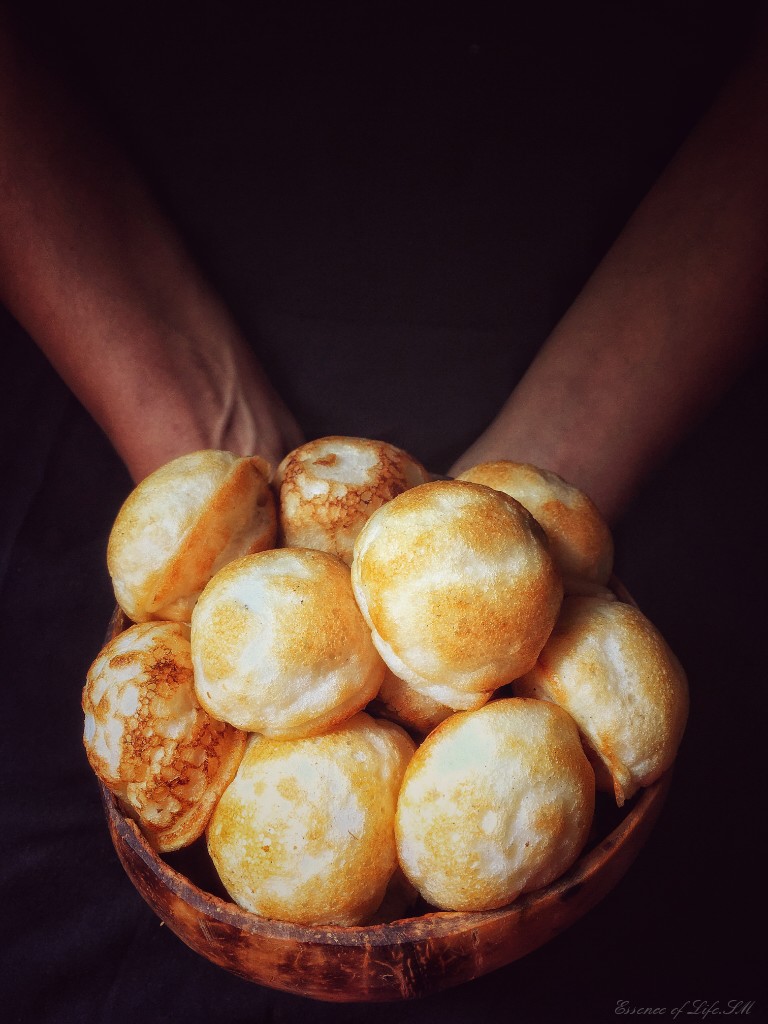
   Most of the days in a week goes with Idli/dosa in a South Indian household.  It is one of the must have breakfast/dinner item served in most of the houses.  When you are bored with Idli/Dosa, then this enigmatic Paniyaram comes for rescue. Mostly paniyarams are prepared with Idli/Dosa Batter, and they are cooked in a metal pan/ mould with small fissures called 'Paniyarakkal'. Even Non-stick Pans are available in the market these days.
     It is one of the popular tiffin items in south India and is called in different names in and around the region.  Basic ingredients for preparing the batter are Rice and Urad Dhal, but some ingredients like Sago/Beaten rice/Cooked Rice are added while grinding the batter to add fluffiness to the Paniyaram and Fenugreek is added for more flavour, texture and gives a golden finish once cooked.
     These crispy yet soft small globes can be prepared as a sweet or savoury dish.  For a sweet version Melted jaggery/palm sugar is added to the batter which is called Inippu Paniyaram.  The plain version or the simple Kuzhi Paniyaram and the savoury version called Kara Paniyaram with simple seasonings can be prepared with the same batter. This is a recipe for simple Kuzhi Paniyaram without any add-ons or seasonings. Paniyarams can be prepared with Idli/dosa batter too.  But this is a fool proof recipe for White, Crispy & Fluffy Kuzhi Paniyarams.

Cuisine : South Indian
Course : Main Course
Difficulty : Medium
Serves : 3-4
Author : SM

Preparation Time : 15-20 Minutes
Soaking Time : 3-4 Hours
Fermentation Time : 8-10 Hours/Overnight
Cooking Time : 20 - 30 Minutes

For more recipe on Tiffin Items, Click here...


INGREDIENTS :

Idli Rice - 1 Cup
Urad Dhal - 1/4 Cup
Beaten Rice / Poha / Aval - 1 Cup
Fenugreek Seeds - a Pinch
Salt - to Taste

METHOD :

  • Clean, wash and soak Rice and Urad dhal along with Fenugreek seeds for about 3-4 hours.
  • Soak Beaten Rice in 1 Cup of water for 10-15 minutes.
  • Grind the rice and dhals nicely.
  • Let the consistency of the batter be slightly thicker, like Idli batter.
  • Drain waters from Beaten rice and grind it in a small blender jar into a thick paste.
  • Add it to Rice- Dhal batter along with Salt and mix well.
  • Allow this to ferment for about 8-10 hours or overnight.
  • The batter would have increased by volume if it has fermented.
  • Before making Paniyarams, mix the batter well until the air is well incorporated.
  • Heat the Paniyarakkal on a medium flame.
  • Add 1/2 Teaspoon of oil into each fissure.
  • Once the oil is heated, pour the batter into the fissures until the 3/4 level.
  • Wait for about 2-3 minutes, cover the Paniyarakkal with a lid and wait for another 2-3 minutes.
  • Open the lid, flip the Paniyarams with a skewer and wait for another few minutes until both sides turn crispy and slightly golden.
  • Remove the Paniyarams from the pan and serve it hot with Coconut chutney, Sambar or Tomato Chutney.
  • Coconut Chutney ground with Dry Red Chillies goes well with Paniyarams.

NOTES :

  • Par-boiled Rice can be substituted for Idli Rice.
  • Adding Beaten Rice makes fluffy Paniyarams.  Can substitute it with Raw Rice.
  • If Using Raw Rice soak and grind it along with other ingredients.

RASAM
PARUPPU RASAM
     Would you believe, If I say there are more than 100 versions of Rasams?  But it is a truth gone unrealized with different varieties of Spices and ingredients added while preparing Rasam, makes it uniquely unique. Making Rasam may sound as simple as the dish, but it is a skill to be perfected.    As it differs along with regions in and around South India, I feel it takes different roles and caters different flavours as a signature dish of every cook and kitchen as a matter.
     For the Love of Rasam - a simple soupy dish which performs its role as an appetizer, digestive agent, taste enhancer and also relieves from cold and flu.  This simple dish is cooked almost every day in a South Indian household, along with Sambar/Curries, Kootu and Poriyals.  This makes it a task for it to be served in different versions daily.  Rasam is an integral part of a daily lunch menu and also is also one of the must have dishes in an elaborate South Indian Banquet(Virundhu/Sadhya).
     Rasam is a watery/soupy preparation made with Tuvar Dhals, Horse Grams, Tomatoes, Tamarind, Garlic, Shallots, Neem Flower, Mango, Pineapple etc., along with spices like Pepper, Cumin, Fenugreek, Asafoetida, Dry Chillies, Coriander Seeds, Cinnamon etc., and sometimes flavoured with Lemon or Oranges too. Some Rasams are prepared with one or more of above ingredients mixed and added together to suit your palate.
     This Paruppu Rasam is a version most commonly prepared with Cooked Tuvar Dhal, Tomatoes and spices. Mashed Tuvar Dhal is added to cooked Tomatoes, Tamarind extract and Rasam powder along with the excess water used for cooking Dhal.  It is seasoned with Mustard seeds, Garlic Pods, Dry Red Chillies, Asafoetida powder and Curry Leaves and garnished with fresh Coriander Leaves to enhance the overall flavour and taste of this Rasam.  I usually add Jaggery to any dish which has Tamarind in it.  Both Jaggery and Tamarind goes hand in hand to give a balanced taste.


Cuisine - South India
Recipe Type - Soup / Rasam
Spice Level  - Medium
Difficulty - Easy
Serves - 4
Author - SM


Preparation Time - 10 - 15 Minutes
Cooking Time - 10 - 15 Minutes


HOW TO COOK PARUPPU RASAM


INGREDIENTS :

For Rasam :

Water used for cooking Tuvar Dhal - 1 Cup
Tamarind - 1 Lime Size.
Cooked Tuvar  - 1/4 Cup
Tomato - 1 No.
Rasam Powder - 2 Tbspns
Turmeric Powder - 1/2 Tspn
Salt - To Taste
Jaggery / Sugar - A pinch (Optional)

For Tempering :

Sesame Oil/Ghee - 2 Tspns
Mustard Seeds - 1/2 Tspn
Asafoetida Powder - A Pinch
Dry Red Chillies - 1-2 Nos.
Garlic - 5-6 Cloves
Curry Leaves - 2 Sprigs


For Garnishing :

Coriander Leaves - Few

METHOD : 

  • Clean the Tuvar Dhal and wash them thoroughly to remove any debris or dust.
  • Pour 3/4 - 1 Cup of Water for 1/4 Cup of Dhal.
  • Pressure cook the lentils for 2-3 whistles on a high flame, lower the flame and cook for another 3 whistles. 
  • Drain the cooked water and leave it aside.
  • Soak Tamarind in water for few minutes and extract tamarind juice out of it.
  • Add Chopped Tomatoes into the Dhal Water along with Tamarind extract and Rasam Powder.
  • Boil this for about 5-8 minutes and leave it aside to cool down. 
  • Mash the Tomatoes and remove the skin.
  • Add mashed Tuvar Dhal, Turmeric Powder, Salt and Jaggery to the Tomato- Dhal water and allow it to boil for few minutes on a low flame.
  • Heat Sesame Oil/Ghee in a pan, lower the flame, splutter Mustard seeds, Curry Leaves, and Dry Red Chillies.
  • Saute Garlic cloves along with it.
  • Add Asafoetida to the above and give a quick stir.
  • Pour Tomato - Dhal mix to the seasonings and mix well.
  • Finally, add mashed Tuvar Dhal, Jaggery and mix well.
  • Switch off the flame, garnish with Coriander Leaves and immediately cover the Rasam bowl.
  • Serve Paruppu Rasam hot with Rice.

NOTES :

  • For more details on How to cook Beans, Lentils and Pulses, click here ... 
  • Add some extra water to the cook the Dhal for Rasam.
  • Seasoning Paruppu Rasam with Ghee gives a nice flavour to the dish, but it is truly optional.
  • Adding Jaggery also is purely optional.
  • Covering the Rasam bowl immediately after the seasonings are added is to retain and infuse the flavours into the Rasam.

PRISTINE POULTRY
KADAI CHICKEN MASALA
     Kadai/Karahi Chicken is nothing but a rich gravy cooked and served in a utensil called Kadai/Wok.  Kadai/Karahi is a Deep, heavy bottomed Circular pans used for cooking in India, Pakistan, Bangladesh and Nepal.  Slightly shallow pans of the same genre are found in other Southeast Asian countries.
    This method of cooking Chicken/Lamb is most prevalent in North India and Pakistan. Whereas the Pakistan version of this dish does not add Capsicums, but North Indian version is loaded with Capsicums(Bell Peppers).  The flavour of Bell Peppers induces a wonderful taste to this traditional Chicken Masala.  Freshly ground spice powders enhance the overall flavour of the dish.
     Can adjust the consistency of the gravy to suit along with the dish it is served with.  While preparing as a side dish for Rotis I usually prepare it with some gravy and add Cashew Paste/Fresh Cream.  But for Rice dishes, I make it slightly thicker than the above. For an elaborate vegetarian twist, this recipe can be prepared with Paneer, Mushrooms or Green Peas.


Cuisine : North Indian, Pakistani
Course : Side Dish
Difficulty : Medium
Serves : 6
Author : SM

Preparation Time : 15-20 Minutes
Cooking Time : 20-30 Minutes


HOW TO COOK KADAI CHICKEN MASALA / KARAHI MURG

INGREDIENTS :

Chicken - 500 Gms
Onions - 2 Nos.
Ginger-Garlic Paste - 4 Tbspn
Green Chillies - 5-6 Nos.
Tomatoes - 3 Nos.
Turmeric Powder - 1 Tspn.
Oil/Ghee - 3 Tbspns.
Fenugreek Seeds - 1/2 Tspn
Cashew Nuts - 10-12 Nos.
Salt - To Taste
Sugar - 1/2 Tspn


For Spice Powder :

Coriander Seeds - 1 Tbspn
Green Cardamom - 6-7 Nos.
Cloves - 6-7 Nos.
Peppercorn - 1/4 Tspn

To Garnish :

Coriander Leaves - Few
Kasuri Methi (Dried Fenugreek Leaves) - Few

METHOD :

  • Clean and Cut Chicken into small pieces.
  • Dry roast all the ingredients mentioned under the 'for the spice powder' until fragrant on a low flame and keep it aside.
  • Grind the dry roasted spices into a fine powder.
  • Puree the Tomatoes and keep them aside.
  • Heat oil/ghee in a pan, splutter Fenugreek seeds.
  • Saute Ginger-Garlic paste until fragrant.
  • Add finely chopped Onions and fry them until translucent.
  • Add 1/2 the amount of ground Spice powder, Turmeric, Red Chilli Powder, slit Green chillies and mix well.
  • Add Tomato Puree to the above Mix and give a quick stir.
  • Leave this on a low flame until raw flavour goes and oil separates from the curry.
  • Now add Chicken pieces, salt and enough water for the chicken to cook. 
  • Cover and cook until chicken turns soft and tender.
  • Add Capsicum slices and cook for few minutes.
  • Finally, add ground Cashew paste, Sugar into the gravy and leave it on a low flame for few minutes.
  • Finally, sprinkle the remaining freshly ground Spice Powder and give a quick stir.
  • Garnish it with Coriander Leaves and Kasuri Methi.
  • Serve hot with any type of rice dishes like Pulaos, Biriyanis or Steamed Rice.
  • Goes well with Roti, Naan, Kulcha, Parathas, Chappatis etc.,

NOTES :

  • Can marinate the chicken pieces with turmeric, red chilli powder, coriander powder and 2 Tbspns of curd for 30 minutes.
  • Dry roast the spices in order as I have mentioned in the list. (smaller spices tend to brown sooner) 
  • Adding freshly ground Spice Powder gives an enhanced flavour to the dish.
  • Adding Capsicum is optional.


SPINACH
SPINACH STIR FRY/BAYAM GORENG
      A simple Spinach Stir Fry / Bayam Goreng with very few ingredients and it can be cooked within minutes.  Maybe Spinach is rather a different green when seeking deep into what BAYAM is, I would like to call it - Asian Spinach.  Universally known as Amaranth Leaves, locally called as Bayam in Malaysia, Singapore & Indonesia. It is called as Thandu (Stalk) Keerai/Cheera(Green) in Tamil & Malayalam. And this is one ancient or first plant variety ever to be domesticated and grown for personal use. It has travelled a long way since civilizations to the present era.
      An easy to grow Green variety, which is available in shades of pink and green. We can get them at a very cheap cost in the market and the farmer's market is always loaded with bunches of fresh and luscious locally grown greens.  But growing these Greens in your backyard is another technique which can cater you with fresh leaves at your service, whenever needed.  It is more than enough that you buy the seeds once, they shoot up and grow into matured plants, flower up and give you a new batch of black coloured tiny seeds, which you can sow it again and again for fresh produce.
     Amaranth Leaves are popular around the world for its rich and nutritious values.  The most common green consumed in Asian countries is rich in Proteins, Vitamins and minerals like Iron, Calcium & Phosphorus.  The Red Variety of this green is more flavourful and nutritious compared to the Green variety. This recipe is a simple stir-fry with Garlic and Dry Chillies and slightly seasoned with Oyster Sauce/ Light Soy Sauce. Bayam is quickly stir-fried in high heat to retain its crunchiness, colour and nutrition.

Cuisine - Southeast Asian
Course - Side dish
Spice Level - Low
Difficulty - Easy
Serves - 4
Author - SM


Preparation Time - 5 Minutes
Cooking Time - 5 - 7 Minutes

HOW TO MAKE SPINACH STIR FRY / BAYAM GORENG


INGREDIENTS :

Bayam (Amaranth Leaves) - 1 Bunch
Dry Red Chillies - 3-4 Nos.
Garlic - 2 -3 Cloves
Sugar - a Pinch
Salt - To Taste
Cooking oil - 1 Tbspn
Oyster Sauce / Light Soy Sauce - 2 Tspns


METHOD :

  • Wash the greens and allow it to drain in a colander.
  • Cut them into long strands discarding the hard stalks and roots.
  • Heat the pan with oil over high heat.
  • Add Dried Red Chillies and toss them for few seconds until then fluff up.
  • Add minced Garlic and stir-fry for about 10 - 15 seconds till fragrant(should not be browned).
  • Toss in the Bayam along with a dash of Salt and a pinch of Sugar, stir-fry in quick strokes. 
  • When the Bayam starts to wilt, add Oyster Sauce/ Light Soy Sauce and give a quick stir.
  • Remove from fire and serve it immediately.
  • Goes well with plain fragrant rice or along with any rice/noodles recipe.

NOTES :

  • Do not add extra water to the dish.
  • Water from the Greens should be sufficient to keep them moist until cooked.
  • Do not cover the pan while cooking.
  • Stir fry the greens/ bayam on high heat for a short time.  This will retain its nutrients and keep them fresh, green and crunchy. 
  • Do not brown the garlic, as they would tend to give a bitter taste to the dish. 
  • Adding Sugar will help in retaining the colour of the vegetable.

PRAWNS
 SAMBAL UDANG /PRAWN SAMBAL


     If Prawns/Shrimps can be converted into an exotic dish, then it could be done with Prawn Sambal.  It is a common cooking method followed in Malaysia, Singapore and Indonesia.  Cooking Prawns in Sambal - which is nothing but an aromatic spicy Chilli paste with wonderful notes of locally available Aromatic herbs and spices. This recipe is a wonderful Malaysian Style Seafood recipe, a standalone dish in Malaysian households.
     Prawns being a delicacy at our household, I try new versions whenever I come across with a new recipe.  The first trial with a new recipe was Indonesian Prawn Curry, which I tried after eating at a famous native run seafood restaurant near our place. When I came up with Sambal Udang during another encounter at a local eatery. Though it looked like a normal Prawn Masala, it had some new flavours. I least had a clue what ingredients were used in it.
     During our initial years in Malaysia, I was even oblivious about the ingredients like Galangal, Belacan, Bunga Kantan, Daun Kesum, Daun Selasih etc.,  Gradually I started asking the vendors in fresh market what they were, but with my little knowledge of the language I always end up having a lot of information, unfortunately not understanding them.  But I make sure to catch up with one main information, the name of the herb. The funny part is I keep repeating it to remember, or immediately I would jot it down. The next thing I would do is to search for them on the internet.
     In due course, I started to try my hand with local cuisine and I am yet trying to perfect it in my best possible way.  I specifically love dishes with Lemongrass, Galangal and Kaffir Lime Leaves which gives a refreshing note to the dishes they are added into. This spicy Sambal Udang is one dish we can hardly resist. It pairs well with steamed Jasmine Rice and needless to say that it goes perfectly well with Nasi Lemak.

Cuisine : South East Asian
Course : Side Dish 
Spice Level : High
Difficulty : Medium
Serves : 4
Author : SM

Preparation Time : 20 - 30 Minutes
Cooking Time :  20 - 30 Minutes

INGREDIENTS:

Prawns/Shrimps - 500 Gms
Onions - 1 No.
Oil - 3 Tbspns
Tamarind - 2 Tspn
Salt - To Taste
Palm Sugar (Gula Melaka) - 3 Tspns

For Sambal Paste :

Dry Red Chillies - 10-12 Pieces.
Birds-eye Chillies - 5-7 Pieces
Shallots - 10 Nos.
Garlic - 3 Cloves.
Lemongrass/Serai - 2 Stalks
Fresh Turmeric Root - a Small Piece
Dry Shrimp Paste(Belacan) - 2 Tspns


METHOD :

  • Soak the Dried Red Chillies in hot water for 20-30 minutes until they are soft.
  • Dry roast the Shrimp paste (Belacan) until fragrant.
  • Grind soaked Dry Chillies, Roasted Shrimp Paste, Birds Eye Chillies, Garlic and Shallots into a smooth paste.
  • Cut Lemon Grass Stalks into small pieces, use just the white part of it.
  • Can Grind Lemon Grass along with the Sambal ingredients, or just bruise them and add it while sauteing.
  • Peel, devein and wash the Prawns and keep it aside.
  • Heat oil in a wok and saute the ground Sambal paste on a high flame for about 10 minutes or until all moisture evaporates.
  • If the mix is a bit dry, add some more oil and saute them on a low flame for another 5-10 minutes or until oil separates from the mix.
  • Now add Prawns to the Sambal and mix well. 
  • Add Salt, Palm Sugar and mix well.
  • Cook this in low flame until Prawns are cooked.  Can add some water at this stage.
  • Once the prawns are cooked, add tamarind extract and boil it for another 5 minutes on a low flame.
  • At this stage, the Sambal turns fragrant, if not saute it for some more time on a low flame.
  • Finally, add the onions cut into rings and give a quick stir.
  • Leave this on a low flame for few minutes. 
  • Serve hot Udang Sambal with steamed rice, fried rice or nasi lemak.

NOTES :

  • I used the long- wrinkled variety which is less spicy. To reduce the spiciness can snip off the soaked dry chillies into two and de-seed them. 
  • Adjust the number of Chillies to suit your spice preference.
  • Blend the Shallots coarsely.
  • I usually bruise the Lemon grass stalks and add it to the Sambal mix while Sauteing, because grinding it along with Sambal mix ends with Lemongrass strands all over.
  • Grind the paste with less water to avoid splattering while sauteing the Sambal in high flame.
  • Adding the onions cut into rings gives a good texture to the sambal.
  • Can add few Petai(Stinky Beans) along with Prawns.
  • Substitute Sugar instead of Palm sugar.
  • Can add Turmeric Powder to the Sambal Paste instead of Fresh Turmeric Root.
Newer Posts Older Posts Home
Search Essence of Life - Food

I Me Myself

SM - Essence of Life
Essence of Life - Food is all about daily cooking with a simple sense of taste and health. It is all about food. Not a day goes by without eating for most of us, so what we eat matters on the whole. Food in the mode of goodness increases the duration of life, purifies one's existence, and gives strength, health, happiness, and satisfaction. Above all ingredients, the most vital one in my kitchen is love.
Sm
@ Essence of Life - Food

Popular Posts

  • Kizhi Parotta: Kothu Parotta and Salna Wrapped in Banana Leaves
  • Traditional Olan Recipe - A Kerala Classic from Madhya Thiruvithamkoor
  • How to Serve Onam & Vishu Sadhya: Tips for the Perfect Kerala Feast
  • Authentic Ambur Vaniyambadi Chicken Biryani Recipe (Traditional Tamil Nadu Style)
  • Avalose Unda Recipe – Traditional Kerala Sweet Made with Avalose Podi

Labels

AROUND THE WORLD BAKING BEVERAGES BIRIYANI & PULAO BREAKFAST CURRIES DESSERTS FROM GODS OWN COUNTRY From My Family's Kitchen - Heirloom Recipes GLOSSARY HOW TO... KERALA PALAHARAM KONGU CUISINE KUIH MUIH MALAYSIAN CUISINE MIDDLE EASTERN CUISINE Manvasanai - Flavours from Tamil Soil PICKLES RICE DISHES ROTIS SADHYA SNACKS & SAVOURIES SOUPS SPICE POWDERS TIFFIN ITEMS VIRUNDHU WINES eBook
Ebook - What I Cook - For Onam

Ebook - “What I Cook - For Onam”

Amazon.com/dp/B0CGPVY6J3

Indulge in Kerala’s Culinary Heritage: Traditional Onam Sadhya Recipes, with Expert Serving Tips! Celebrate Onam the authentic way! Discover 25 timeless Kerala Sadya recipes in my ebook. From avial to payasam, bring home the flavours of tradition. Available now on Amazon!

Essence of Life

Subscribe & Follow

© 2026 | Essence of Life - Food

  • Home
  • Ask First
    Please note that all rights for the photographs and texts on this blog, unless otherwise mentioned, rests with the author. Please do not use without permission.
  • Privacy Policy